Managing drawdown during a prop firm challenge
How to handle a losing streak without being disqualified: limits, breaks and concrete rules to protect your drawdown.
To manage drawdown in a prop firm challenge, write your firm's daily and overall loss limits down as dollar amounts before the first trade, set a personal daily stop well before the official one, and size each trade from the room you have left. After a loss, cut your size instead of raising it, and close the platform for the day as soon as you hit your personal stop.
What is drawdown in a prop firm challenge?
Drawdown is the drop in your account from a peak. In a challenge, it's the constraint that defines everything: break a drawdown limit and the account is closed, whatever your profit.
Most prop firms use two limits:
- Daily loss limit (daily drawdown): the most you may lose in one trading day. It resets every day, at the firm's reset time, not necessarily at your local midnight.
- Maximum drawdown (overall loss limit): the most you may lose in total. A static drawdown stays tied to the starting balance. A trailing drawdown rises with each new high, so today's limit isn't yesterday's.
Some firms count open trades in real time, others only look at closed results or at the end-of-day balance. Your rulebook says which.
Step 1: know your two limits, as amounts
Write both limits as dollar amounts, not percentages, before your first trade. Add three lines next to them: the reset time, whether open P&L counts, and whether the drawdown is static or trailing. Rules change, so reread them for every new account.
Step 2: set a stricter personal limit
Never trade all the way to the official limit. Set a personal ceiling, half the permitted daily loss for instance. Once you reach it, you close the platform for the day. That margin is what saves you on the day when slippage, a gap or one emotional trade goes wrong.
Step 3: size each trade from the room left
Your risk per trade should come from your remaining room, not from your target. Keep enough room for several losing trades before your personal stop.
Fictional example, hypothetical rules. Daily loss limit: $2,000. Personal stop: half, so $1,000. Risk per trade: $250. You can take four losing trades in a row before you stop for the day, and you're still $1,000 away from the official limit. To turn a dollar risk into a position size, see trading money management and position size.
Step 4: cut size after a loss
After two consecutive losses, reduce your position size rather than increasing it. It's the opposite of instinct, and that's precisely why it works. The emotional mechanism behind that instinct is described in revenge trading: breaking the spiral.
Step 5: protect open profit with a trailing drawdown
With a trailing drawdown, profit you give back still counts against you.
Fictional example. Trailing drawdown of $2,000 on a $50,000 account: the floor starts at $48,000. You make $1,000, the floor rises to $49,000. You give the $1,000 back: your balance is at $50,000 again, but you now have $1,000 of room instead of $2,000.
So once a day or a trade is well in profit, reduce risk: smaller size, partial exits or a tighter stop. Check how your firm updates the floor (real time or end of day) before relying on an open profit.
Step 6: take scheduled breaks
A break is not weakness, it's a rule. Once you've hit your daily target or your loss limit, stop. Tomorrow is a fresh start.
Which mental errors breach drawdown limits?
Drawdown limits are rarely broken by one calm, well-sized trade. They're broken by a chain of decisions after a loss:
- "One more trade to get back to flat", when you're already close to your personal stop.
- Moving or removing the stop to avoid taking a loss.
- Adding to a losing position to improve the average price.
- Sizing up after a big win, then giving it back on a trailing drawdown.
- Trading out of boredom once the plan's setups are done. See overtrading: how to stop.
Write the rule that answers each one in your trading plan, before the session, not during it.
How drawdown fits with the other challenge rules
Drawdown limits protect the account. Other rules decide whether you pass: the consistency rule caps how much of your profit one day can carry, and the prop firm risk management rules cover risk per trade and exposure. For the full picture of why challenges end, see why traders fail prop firm challenges.
See your margin in real time with Altiora
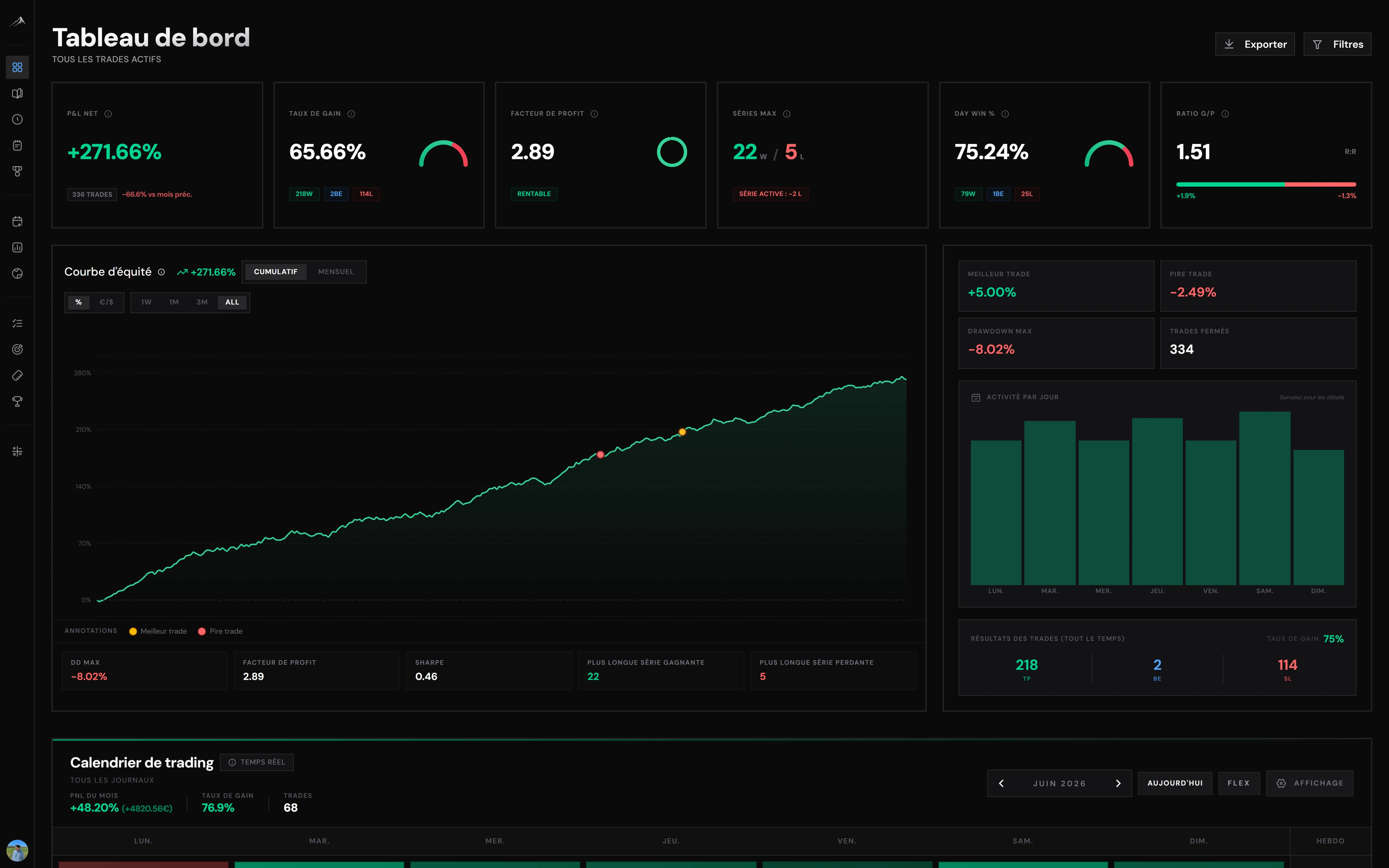
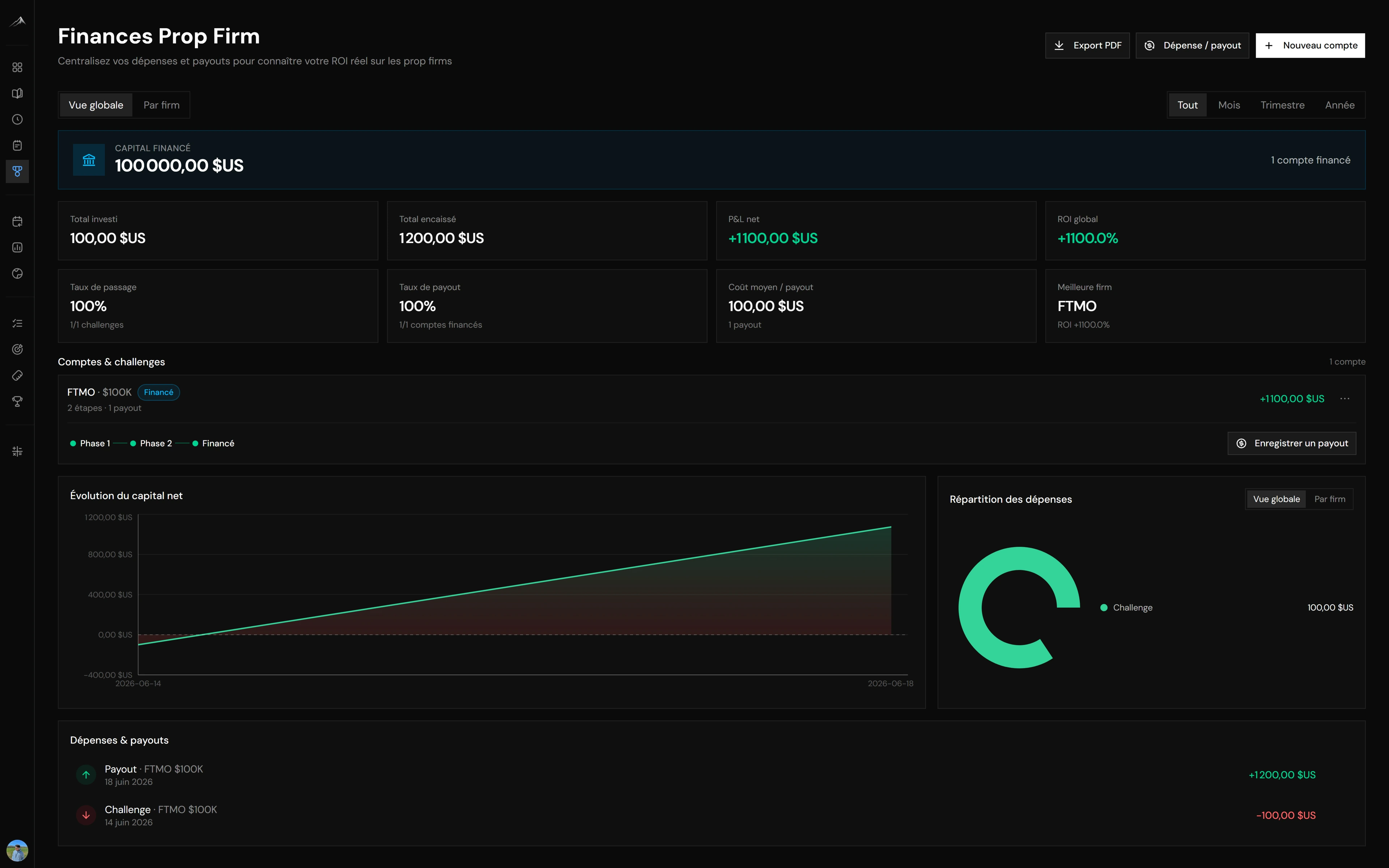
Altiora's challenge tracker shows your distance to the drawdown limit at all times, so you decide with full information. You set it up with your firm's rules: target, daily drawdown, overall drawdown, static or trailing, and consistency threshold. When the drawdown trails, the threshold is recomputed from your high-water mark. Presets ship for FTMO, Topstep and Apex Trader Funding and stay editable. Details are on the trading journal for prop firms page.
The 7-day trial gives you full access, no card.
Frequently asked questions
- What is drawdown in a prop firm challenge?
- The drop in your account from a peak. Prop firms cap it with a daily loss limit and a maximum drawdown, and breaking either one closes the challenge account.
- What is the difference between daily drawdown and maximum drawdown?
- The daily drawdown is the most you may lose in one trading day and resets at the firm's reset time. The maximum drawdown is the most you may lose in total, static or trailing.
- What is a trailing drawdown?
- A loss limit that rises with each new high of the account. Profit you give back still counts against you, so your room shrinks even if your balance is back where it started.
- How much should you risk per trade in a prop firm challenge?
- There is no universal number. Work it out from your remaining room: set a personal daily stop below the official limit and keep enough room for several losing trades before you reach it.
- Which mental errors breach drawdown limits?
- Taking one more trade to get back to flat, moving or removing the stop, adding to a losing position, sizing up after a big win, and trading out of boredom once the setups are done.
About the author
L’équipe Altiora
Altiora editorial team
Altiora's editorial team brings together active traders and the product team. We write about discipline, journaling and performance analysis, grounded in how the platform actually works. We never give investment advice.
Read next
Prop firm consistency rule: math, traps and a daily routine
The consistency rule caps how much profit one day can carry. The math, 4 questions to ask your rulebook, and a journal routine so your payout doesn't get locked.

Trading money management: how to calculate position size (the 1% rule)
Trading money management is not a theory. It is a formula. Here is how to calculate position size, set risk per trade, and stay alive in a challenge as well as on a personal account.
Prop firm challenge: why most traders fail
The real reasons traders fail a prop firm challenge are not technical: risk management, drawdown, discipline. How to master them and pass.
This content is provided for informational and educational purposes only. It is not investment advice, a recommendation, or an incentive to trade. Trading involves a risk of capital loss. Altiora holds no funds and guarantees no results.